




Last updated: August 2026
A good anti-ageing skincare routine doesn’t need 10 steps, especially for mature or menopausal skin. It also works as a simple menopausal skincare routine, because the priorities shift towards hydration, barrier support and tolerating actives comfortably.
AM: cleanse → anti-ageing serum → moisturiser → SPF 50+
PM: cleanse → retinol (2–3 nights/week to start) → anti-ageing serum → moisturiser or overnight masque
If you’re building a routine around dryness, sensitivity and hormonal skin changes, you can also browse the Mature & Menopausal Skin collection.
If your skin feels drier, thinner, or less firm, you don’t need a complicated routine. A good anti-ageing skincare routine for mature skin really only needs five things done consistently: a gentle cleanse, an active treatment step, a retinol serum at night, a proper moisturiser, and an overnight repair step. Then add Sheer Defence SPF 50+ every morning to protect your skin from sun damage. This guide walks through why mature skin behaves differently, what each step of the routine is actually doing for you, and how it all comes together, including how ISSADA's Mature Skin Bundle was put together to cover all five steps without you having to guess which products to pair.
Key Takeaways
- An effective anti-ageing skincare routine for mature skin comes down to five steps: cleanse, active serum, retinol, moisturise, overnight repair done consistently in that order.
- Declining oestrogen (especially through menopause) is a major driver of dryness, thinning, and lost firmness. Mature skin generally needs more hydration and barrier support, not harsher actives.
- Retinoids and daily sunscreen are among the most evidence-backed anti-ageing steps. Hyaluronic acid can help offset dryness and improve comfort, especially when you’re easing into retinol (see our guide to hyaluronic acid in skincare).
- SPF 50+ every morning is the single most effective anti-ageing step, regardless of what else is in your routine.
- Ease into retinol gradually (2–3 nights a week to start) rather than daily, to avoid irritation. Results vary, but many people notice texture and hydration improvements within a few weeks, and visible changes to fine lines within about three months.
Table of Contents
- Why Mature Skin Needs a Different Routine
- What Actually Makes a Routine "Anti-Ageing"
- The 5-Step Anti-Ageing Skincare Routine, Step by Step
- A Simple Morning and Evening Routine
- Mature Skin Extras: What a Lot of Routines Miss
- Common Mistakes People Make With Anti-Ageing Skincare
- Frequently Asked Questions
- Where the Mature Skin Bundle Fits In
Why Mature Skin Needs a Different Routine
Skin doesn't age gradually and evenly, a lot of the visible change is tied to hormones. As oestrogen declines, particularly through your 40s and into menopausal age, skin produces less collagen and natural oil, which is why dryness, crepiness, and a loss of firmness tend to show up around the same time. The American Academy of Dermatology notes that daily moisturising and sun protection become even more important during this stage, simply because ageing skin holds onto water far less efficiently than it used to.
That's really the shift you're working with: less oil, less collagen, more sensitivity. A routine built for oilier, younger skin that is heavy on foaming cleansers and light on moisturiser can end up making things worse. What mature skin generally responds best to is barrier support, hydration, and ingredients that actively encourage collagen production, rather than harsh actives that strip the skin.

What Actually Makes a Routine "Anti-Ageing"
There's a lot of noise around anti-ageing skincare, but it really comes down to a handful of ingredients with genuine evidence behind them:
Retinol speeds up cell turnover and helps slow the breakdown of collagen, which is why it's considered one of the most effective ingredients for softening fine lines and improving texture over time.
Hyaluronic acid holds up to 1,000 times its weight in water, which makes it one of the most effective ways to plump and hydrate skin that's lost some of its natural moisture reserve.
Peptides signal to skin cells to produce more collagen, supporting firmness from within rather than just sitting on the surface.
Antioxidants (like vitamin C and vitamin E) help neutralise free radical damage from UV exposure and pollution, which is a major driver of premature ageing.
SPF isn't technically an "anti-ageing ingredient," but if you skip it, the rest barely matters. Daily broad-spectrum sunscreen is consistently ranked by dermatologists as the single most effective anti-ageing step because UV exposure is responsible for the majority of visible skin ageing.
The good news is you don't need to purchase every single one of these in a separate bottle. A well-built routine layers them in the right order, so each product supports the next instead of competing with it.
The 5-Step Anti-Ageing Skincare Routine: Step by Step
Here's the order that works, and why each step matters. This also happens to be exactly how the Mature Skin Bundle is structured, so you're not left wondering what goes next.
Step 1: Cleanse Gently, Morning and Night
Start and end the day with a gentle non-stripping cleanser, not a bar soap or anything that leaves skin feeling tight afterwards. Mature skin has a thinner, more delicate barrier, so a cleanser that removes makeup and impurities without disturbing that barrier sets up every product that follows to actually absorb properly. ISSADA Daily Gentle Cleansing Gel removes makeup, even around the delicate eye area, without stinging or stripping the skin’s natural moisture.
Step 2: Apply an ISSADA Active Anti-Ageing Serum
Once skin is clean and slightly damp, apply a treatment serum formulated to support collagen and elastin production. This is the step most routines skip or under-invest in, but it's doing a lot of the heavy lifting. It is where hydration and firming actives get delivered directly into the skin, rather than sitting on top of it.
Step 3: Introduce Retinol at Night
Retinol is best used in the evening, since it can increase sun sensitivity and break down in UV light. If you're new to retinol, start two to three nights a week and build up gradually. Going in at full strength every night is the most common reason people give up on it, thinking their skin "can't handle" it. ISSADA's 1% Retinol + HA Serum is a formula that pairs retinol with hyaluronic acid, helping to reduce fine lines and wrinkles, improving skin texture and brightening the complexion.
Step 4: Lock In Moisture
Apply moisturiser after your serums while your skin is still slightly damp to lock in hydration. Mature or menopausal skin benefits from nourishing formulas with plant oils and botanical extracts. ISSADA Replenishing Daily Moisturiser is a lightweight yet deeply hydrating option for dry to normal skin. It combines native botanical extracts and natural plant oils to support healthy, nourished skin.
Step 5: Repair Overnight
This step is often skipped, but it can help when skin feels dry, thin, or affected by hormonal changes.
Use an overnight masque for extra hydration while you sleep. Start two to three nights a week, especially if you are also using retinol, and use your regular moisturiser on other nights. ISSADA Overnight Hydrating Masque contains glycerin, vitamin E, Kakadu Plum, Quandong, and Lilly Pilly to help skin feel hydrated and comfortable by morning.
Plus: SPF, every morning, without exception
SPF should be the final step of your morning routine, not an occasional add-on. Apply a broad-spectrum sunscreen, such as ISSADA Sheer Defence SPF 50+, every day, even indoors and during winter, when UV exposure is easy to underestimate.
A Simple Morning and Evening Routine
Morning: cleanse → active anti-ageing serum → moisturiser → SPF 50+
Evening: cleanse → retinol + HA serum → active anti-ageing serum → overnight masque (2–3 nights a week to start, moisturiser on the other nights)
That's it. Five products used consistently, plus SPF each morning. No 10-step routine, no guesswork about which serum goes before which. Consistency matters far more than how many steps you're doing.
Mature Skin Extras: What a Lot of Routines Miss
A few things that generic anti-ageing advice tends to skip over, but that matter a lot once skin is thinner, drier, or more hormone-affected:
Go barrier-first, not actives-first. If your skin barrier is already compromised, flaking, stinging with normal products, or feeling tight after cleansing, it's worth spending a couple of weeks on gentle cleansing and rich moisturising before layering in retinol or other actives. A strong barrier is what lets actives work properly instead of just irritating.
Have a plan for irritation, not just a routine for good days. Some redness, flaking, or mild stinging when starting retinol is common, but it shouldn't be constant. If it happens, it's fine to drop back a night or two, apply moisturiser before your retinol as a buffer, or use it on alternate nights until skin adjusts. Pushing through irritation usually backfires.
Menopause dryness often needs more than a "hydrating" label promises. Hormonal dryness tends to run deeper than surface dehydration. Look for a combination of humectants (like hyaluronic acid) to draw in water and richer plant oils or occlusives to help seal it in. This is also part of why an overnight step matters more for menopausal skin than it might for younger skin.
What not to combine with retinol. Retinol is more effective when it isn't fighting with other strong actives for the same skin. It's generally best to avoid using retinol on the same night as AHA/BHA exfoliating acids, vitamin C serums, or benzoyl peroxide, since layering these together raises the risk of irritation without adding much benefit. If you use any of these, it's usually simplest to alternate nights rather than stack them.
Common Mistakes People Make With Anti-Ageing Skincare
Going too hard on actives, too fast. Using retinol every night from day one, or layering multiple exfoliating acids at once, usually leads to irritation and redness rather than faster results. Mature skin, in particular, needs a gentler build-up.
Skipping moisturiser because skin still looks oily in places. Combination skin still needs hydration, oiliness in the T-zone doesn't mean the rest of the face isn't dehydrated underneath.
Treating SPF as optional on cloudy days or "just at home." UV exposure through windows and on overcast days still contributes to visible ageing over time.
Buying products separately can make it difficult to know whether they work well together. Ingredients like retinol and certain acids may irritate when combined. That’s why using products designed as a complete routine can be simpler, safer, and gentler on your skin.
Frequently Asked Questions
What age should you start an anti-ageing skincare routine?
There's no single trigger age, it's more about when you start noticing changes, which for many people is the mid-to-late 30s or early 40s as collagen production begins to slow. Starting with hydration, antioxidants, and SPF earlier tends to make the transition into your 40s and 50s more gradual.
Is retinol safe to use during menopause?
Yes, and it's one of the more evidence-backed ingredients for this life stage. Because menopausal skin tends to be drier and more reactive, it's worth starting with a lower concentration, pairing it with hydrating ingredients like hyaluronic acid, and easing in a few nights a week rather than daily.
How often should you use retinol on mature skin?
Start with retinol two to three nights a week, then slowly increase as your skin adjusts. Reduce use if you notice redness, dryness, flaking, or stinging. Using it consistently at a comfortable frequency is better than using it too often.
What is a good menopausal skincare routine?
Focus on hydration and skin barrier support. Use a gentle cleanser, an antioxidant or firming serum, retinol gradually at night, moisturiser, overnight repair, and SPF every morning. Choose richer products and add a hydrating serum if your skin still feels dry or tight.
What's the best skincare routine for your 40s and 50s?
In your 40s, introduce retinol slowly. In your 50s, especially after menopause, skin may become drier and more sensitive, you may use richer moisturisers and retinol less often. Review your routine every few months and adjust it as your skin changes.
How long before I see results from an anti-ageing routine?
Most people notice a difference in texture and hydration within a few weeks, but visible changes to fine lines and firmness typically take around three months of consistent use, skin cell turnover simply takes that long.
Can I use a retinol serum and an anti-ageing serum together?
Yes, that's exactly how they're designed to work in this routine. Anti-ageing serum in the morning supports hydration and firmness, while retinol works overnight when it's most effective and least likely to increase sun sensitivity issues.
Where the Mature Skin Bundle Fits In
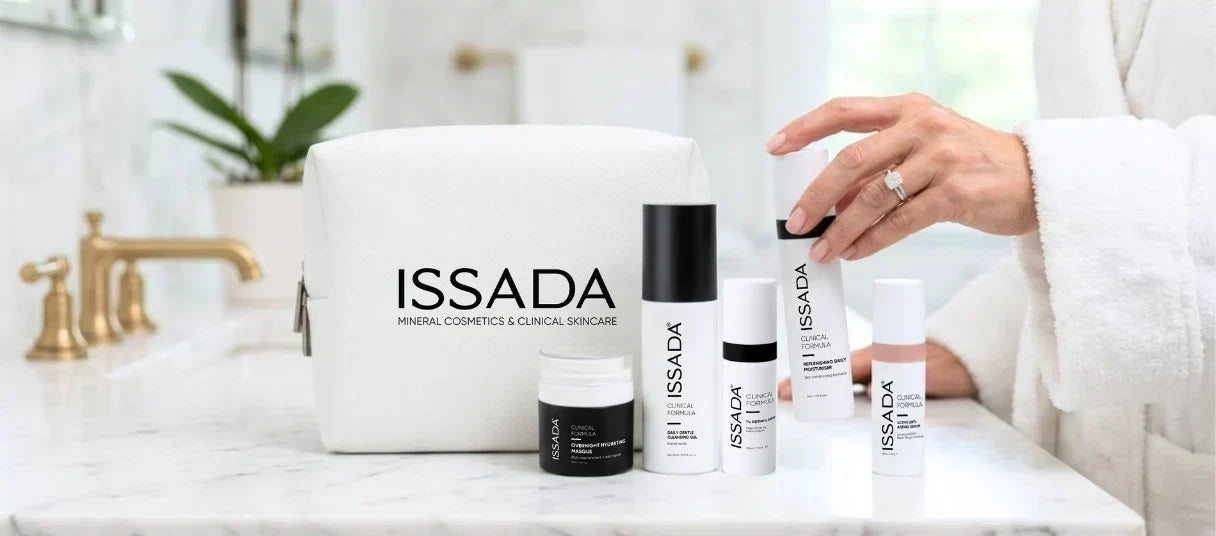
Everything above is exactly what's inside ISSADA's Mature Skin Bundle: the Daily Gentle Cleansing Gel, Active Anti-Ageing Serum, 1% Retinol + HA Serum, Replenishing Daily Moisturiser, and Overnight Hydrating Masque, packed together with a complimentary cosmetic bag instead of five separate purchases you'd otherwise have to research and match up yourself. It's formulated for the fine lines, dehydration, and loss of firmness that come with hormonal skin changes, and every product is vegan, cruelty-free, and made in Australia.
If you'd rather build your own version of this routine product by product, ISSADA's full range of Serums, Moisturisers, and the Mature & Menopausal Skin collection that cover each step individually. For more on how hyaluronic acid fits into a hydration routine specifically, see ISSADA's guide to hyaluronic acid in skincare.

Disclaimer: This content is for general information and isn't a substitute for advice from your own dermatologist, particularly if you have sensitive skin or a diagnosed skin condition.


Leave a comment