


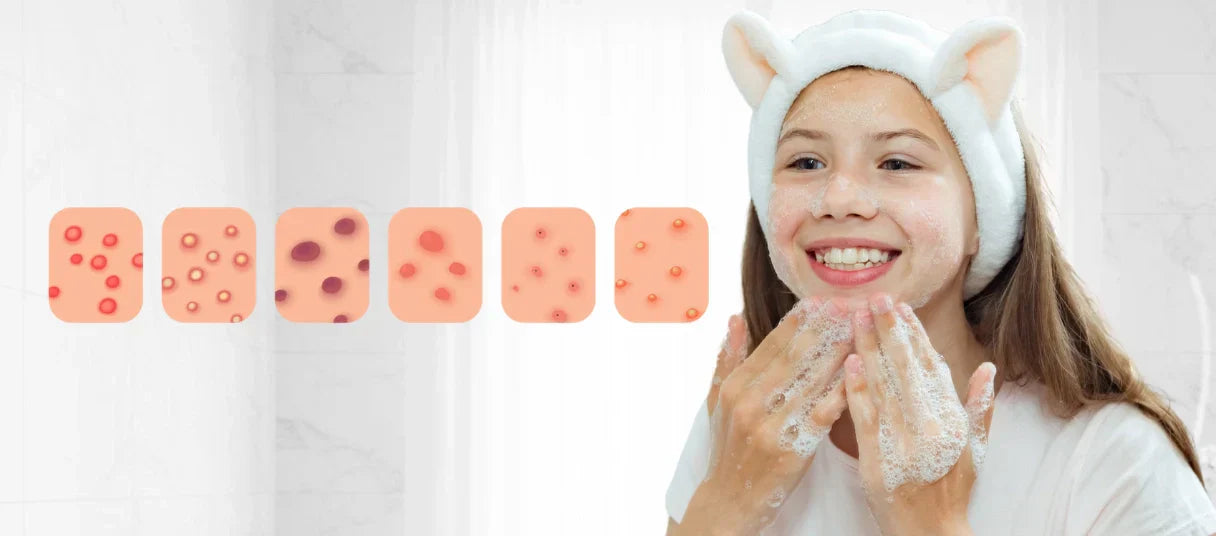


It’s Not Just A Pimple
It can feel like the end of the world when you wake up with a pimple on the end of your nose. For adults, it might sound dramatic. For a pre-teen or teenager, it can be the difference between walking into school confidently or spending the day trying to hide.
That line came from a radio advert years ago, and the 12-year-old in the ad was my son, Jacques. He is now 28 and the Cosmetic Chemist responsible for ISSADA Clinical Formula skincare. He understood the emotional side of breakouts first-hand, and then chose to understand the science behind them.
As the founder of the Australian Skin Clinic Franchise which I grew into an international chain of 60 clinics we saw a LOT of acne. In fact the original Gold Coast Clinic treated three generations of teenage acne. We had a 95% success rate in supporting acne management without antibiotics and medication. That matters more and more as many families are avoiding antibiotic use altogether.
Over time, improved active ingredients have been the saviour of many skin concerns and we are proud to offer an all-super-hero range of products. Each curated formula is created to target specific problems, be it acne, rosacea, pigmentation aging or dry skin.
This guide is designed to help parents and teens understand what is happening in the skin, what commonly makes breakouts worse, and what you can do at home before you ever need to consider stronger interventions.
Disclaimer: This article is general education only and does not replace medical advice. If acne is severe, painful, scarring, or affecting your well-being, seek professional assessment.
A Parent’s Perspective: More Than Just Skin Deep
Acne is often dismissed as “just a phase”. But for many young people, it can feel devastating and while yes, it may pass the risks of leaving it to run its course unaided are long term scarring.
The Confidence Connection
Breakouts can affect:
- Self-esteem and body confidence
- Social participation (sport, parties, photos)
- Willingness to speak up in class
- Mood and motivation
At its worst, acne can turn a confident, outgoing teenager into a withdrawn teen. That shift is hard to watch as a parent.
The Parents’ Role: Sideline Cheerleader
The most helpful role is rarely “skin police”. It is calm support.
- Help your child separate myths from facts
- Encourage consistency (not perfection)
- Keep routines simple enough to follow
- Book a consultation early if things are escalating
The Open Conversation
If acne is an issue for your child, talk about it. Many of the myths parents heard in high school still circulate, and they can delay effective action. The earlier you start sensible strategies, the better the chance of avoiding long-term inflammation and scarring.
Science 101: What Actually Causes Acne?
To understand acne, it helps to understand what a pore is.
The Mechanics Of A Pore
A pore is the opening of a hair follicle. Inside that follicle are:
- A hair
- A sebaceous (oil) gland that produces sebum
- Skin cells that shed naturally
- Microorganisms that normally live on the skin
Acne often begins when the pore becomes blocked, preventing sebum from flowing normally.
The Two Extremes That Block Pores
When people ask about the causes of blocked pores in teens, it usually comes down to one of the following:
1. Too Much Natural Oil
- During puberty, hormonal changes (including increased androgens in boys and girls) can stimulate oil glands to enlarge and produce more sebum. When oil becomes trapped, it can contribute to congestion and breakouts.
- The darker your skin, the more oil you are likely to produce which is why darker skins tend to be more acne prone.
2. Not Enough Oil (Dry, Flaky Skin)
- Most people are surprise to find that people with dry skin suffer from acne too. The fact is that dry skin holds onto its own dead skin cells for longer, and these build up and block pores.
Identifying The Bump
A quick guide:
- Blackhead: A plug of oil at the top of the pore that has oxidised and darkened.
- Pimple/Pustule: When bacteria multiply and inflammation increases, the area can become red, tender, and may develop a yellow centre.
- Cyst/Nodule: Deeper, more painful bumps under the skin that may not have a visible head and can be more likely to spread sideways than rise to the surface and have great potential for scarring.
Some Other “Bizarre” Culprits: Unexpected Causes Of Blocked Pores
Some of the most common breakout triggers are not “dirty skin” or “bad hormones”. They are everyday habits.
1. Physical Contact
Leaning on hands in class, touching the face while thinking, or wiping sweat during sport can transfer dirt and bacteria and contribute to congestion.
2. Hair Habits
Hair gels, waxes, sprays, and sticky styling products can transfer to the forehead and cheeks via hands and pillowcases.
- Keep fringes off the forehead where possible
- Change pillowcases regularly
- Wash hairline areas thoroughly after sport
3. The School Hat Trap
Sweat and dirt build up inside hat rims and can trigger forehead breakouts.
- Wash hats and caps regularly
Note: For formal hats, consider sewing Velcro inside and attaching a disposable cloth insert that can be changed daily.
4. The Makeup Mistake
Poor-quality makeup can contain talc and other ingredients that block pores more easily. Sleeping in makeup is a major cause of congestion.
Mineral makeup is often preferable for acne-prone skin because it can provide coverage without the heavy occlusive feel of traditional formulas.
5. Heavy Sunscreen
While mineral makeup is good for your skin, thick Zinc sunscreens can be bad for ace - especially in the Australian Climate. Sunscreens with high concentrations of Zinc tend to trap sweat and cause breakout.
Fact Vs Fiction: Debunking 7 Big Acne Myths
Below are common myths we still hear in clinic, along with practical, safer options
1. Myth: Popping Pimples Helps Them Heal Faster
Fact: Picking can pushes bacteria deeper, add more germs, and increase inflammation. In turn this can also increase the risk of scarring. .
2. Myth: Chocolate And Junk Food “Cause” Acne
Fact: Breakouts are not that simple. However, a diet higher in whole foods can support
skin resilience. Foods rich in vitamin A precursors (beta-carotene) include carrots, sweet potatoes, pumpkin, kale, spinach, and apricots.
3. Myth: A Tan Clears Acne
Fact: Sun exposure can dry and irritate skin, and any “improvement” is often temporary masking. Always use appropriate sun protection - we recommend our ISSADA Sheer Defence SPF 50+ which is readily absorbed and does not have excessive Zinc.
4. Myth: If You Keep Breaking Out, Use More Medication
Fact: Less is more. Overuse can damage the skin barrier, increasing sensitivity and rebound oiliness.
5. Myth: You Should Dry Out Pimples
Fact: Over-drying can worsen congestion. Many benzoyl peroxide products can be too harsh for some younger skin. Our ISSADA Breakout Control Gel helps to get those breakouts under control by gently but firmly addressing infection and inflamation and soothing the skin.
6. Myth: Scrub Harder And Wash More Often
Fact: Over-washing and aggressive scrubbing can irritate skin and increase inflammation.
7. Myth: If You Want Clear Skin, Don’t Wear Makeup
Fact: Wear the right makeup. Look for non-comedogenic options and avoid talc and nano-particles at all costs.

Recommended Home-Care Routines
We are seeing younger and younger acne sufferers so we have included recommended routines below for pre-teens and teens. Of course adults with acne can use these routines too.
These routines are designed to be realistic for school mornings, sports, and busy households. Consistency matters more than complexity.
Routine A: The Pre-Teen (Starting a Good Routine)
Goal: Keep skin clean and comfortable, reduce congestion, and support the barrier.
DAILY ROUTINE
- Daily Gentle Cleanser (AM and PM)
- Niacinamide + B5 Serum (AM and PM)
- Acne-Prone Moisturiser (AM and PM)
- Breakout Control Gel 2-3 times a day (As Required)
Benefits (What The Routine Does For Skin)
- Helps to gently but thoroughly remove daily build-up without stripping
- Helps support a calmer-feeling skin barrier
- Helps maintain hydration
- Helps target early-stage breakouts without aggressive over-drying
Client Review (Niacinamide + B5 Serum)
“BEST SERUM!! I will never stop using this magic serum. I have break out prone, very oily skin that has been sensitised from stripping my barrier. This serum calms my skin, refines my pores and hydrates my skin amazingly!!” - Brooke
Routine B: Teens With Oily Skin
Goal: Reduce congestion while keeping the barrier supported.
DAILY ROUTINE (Mild acne)
- Salicylic Purifying Cleanser (AM and PM)
- 14% Glycolic Polishing Scrub (2-3 times a week)
- Acne-Prone Moisturiser (AM and PM)
- Breakout Control Gel (As Required)
DAILY ROUTINE (Aggressive & Cystic Acne)
- Salicylic Purifying Cleanser (AM and PM)
- 14% Glycolic Polishing Scrub (start 2-3 times a week and build up to daily)
- Acne-Prone Moisturiser (AM and PM)
- Breakout Control Gel (As Required)
THE WHY:
- Effectively lift excess oil and debris from the pore opening
- Helps smooth uneven texture caused by build-up
- Assists in maintaining hydration so skin does not rebound with extra oil
- Supports clearer-looking skin with consistent use
Client Review (Acne-Prone Moisturiser)
“Acne prone moisture. This works really well, it got rid of the bumps on my face.” - Bella T. 🇦🇺
Routine C: The Teen With Dry Or Flaky Skin
Goal: Reduce blockages caused by dead skin build-up while protecting comfort.
DAILY ROUTINE
- Daily Gentle Cleansing Gel (AM and PM)
- 14% Glycolic Polishing Scrub (PM, as directed)
- Niacinamide + B5 Serum (AM and PM)
- Synbiotic Moisturiser (As Required)
Benefits (What The Routine Does For Skin):
- Effectively cleanses without leaving skin tight
- Assists in loosening dead skin build-up
- Supports barrier function
- Helps keep skin supple, so congestion is less likely
Client Review (14% Glycolic Polishing Scrub)
“I love this scrub and have been using it for more than 5 years. I only have to use it 2 or 3 times a week as per the directions, and a little bit goes a long way. I even have my husband using this scrub on his face, and I tell him not to use too much.” - Tracy D. 🇦🇺
The ISSADA Difference: Why Mineral Makeup Matters
For teens who want coverage (or need it for confidence), makeup choice can influence congestion.
Features (What ISSADA Mineral Makeup Has):
- Mineral-based formulas designed for breathable wear
- Options suited to different coverage preferences
- A focus on non-comedogenic suitability
Benefits (What It Does For The Skin Experience):
- Helps provide coverage without a heavy, occlusive feel
- Helps reduce the risk of pore-blocking build-up when removed correctly
- Helps teens feel more confident while they work on consistency
Professional Help: When Home Care Isn’t Enough
Home routines can make a meaningful difference, especially for pre-teens and younger teens. But there are times when professional support is the smartest next step.
Consider booking a consultation if:
- Breakouts are painful, deep, or widespread
- Skin is scarring or leaving persistent mark
- Acne is affecting mood, confidence, or school life
- You have tried a routine consistently for 4–6 weeks with minimal improvement
The Clinic Approach - Visit an ISSADA Skincare Professional
Our ISSADA Skincare stockists are trained in a variety of treatments to address acne and acne scarring. Our range of in-clinic/salon peels address acne and other skin concerns . To find your nearest stockist use our location finder,
Conclusion
Acne is common, but that does not mean you have to “just grow out of it”. With the right information, a consistent routine, and support when needed, skin can improve.
Not sure what type of acne you’re dealing with or which steps will work best? Book a professional acne consultation for personalised guidance. You can also visit our online store to explore targeted acne solutions designed to support clearer skin.
FAQ: Pre-Teen And Teen Acne (Australia)
What Are The Most Common Causes Of Blocked Pores In Teens?
Blocked pores are commonly linked to hormonal oil changes, dead skin build-up (especially in dry skin), hair products, hat rims, touching the face, and sleeping in makeup.
Are There Pre-Teen Acne Treatments Australia Parents Can Start With At Home?
Yes. For many pre-teens, gentle cleansing, barrier support, and targeted spot care are a sensible first step. Keep routines simple and consistent.
What Is A Non-Antibiotic Acne Treatment Approach?
A non-antibiotic approach focuses on consistent home care, barrier support, appropriate exfoliation, and professional treatments when needed, rather than relying on oral antibiotics.
Should Teens Stop Wearing Makeup If They Have Acne?
Not necessarily. Many teens do better with mineral-based, non-comedogenic options and thorough removal at night.
When Should We Seek Professional Help?
If acne is painful, scarring, widespread, or affecting well-being, or if consistent home care for 8–12 weeks is not improving the skin, seek professional assessment.
About the Author
Deb Farnworth-Wood, ISSADA Founder
 With over three decades in health and wellness and nearly twenty in medi-aesthetics, Deb Farnworth-Wood has helped shape the standards of Australia’s modern beauty industry. Her vision for ISSADA blends scientific rigour with everyday practicality, proving that great skin isn’t about trends, but about smart and consistent care.


Leave a comment