




Last updated: November 2026
Exfoliating acids tend to get filed under "oily and breakout-prone skin". But the same AHAs and BHAs that keep congested skin clear can also make a real difference to mature and menopausal skin, as long as you use them the right way.
This guide explains what changes in your skin as you age, how AHAs (like glycolic acid) and BHAs (like salicylic acid) help, and how to add one of two ISSADA exfoliating options, our Salicylic Purifying Cleanser or our 14% Glycolic Polishing Scrub, to the products in our Anti-Ageing / Mature Skin Bundle.
Key Takeaways
- Skin renews itself more slowly as we age. Dead cells sit on the surface for longer, so skin can look dull, feel rough and take makeup unevenly.
- AHAs and BHAs help loosen the "glue" between those built-up surface cells, which supports the skin's natural cell turnover and leaves it looking smoother and brighter.
- Glycolic acid (an AHA) works on the surface: dullness, rough texture and uneven-looking tone. Salicylic acid (a BHA) is oil-soluble, so it also works inside oily, congested pores, which many people find return around menopause.
- Mature skin does best with exfoliation two or three times a week, not every day, and with plenty of hydration and barrier support around it.
- Keep acids and retinol on separate nights (or use your acid in the morning), and wear SPF 50+ every day.
Table of Contents
- What changes in mature and menopausal skin
- How AHAs and BHAs help ageing skin
- Two ways to add acids: cleanser or scrub
- How they fit with the Mature Skin Bundle
- Who should take extra care
- Frequently Asked Questions
What Changes in Mature and Menopausal Skin
When you're young, your skin replaces its surface cells quickly. With age, that renewal slows down noticeably. Old cells hang on for longer and build up, which is a big part of why mature skin can look flat or dull, feel rough to the touch, and why fine lines and uneven tone can look more obvious.
Menopause adds another layer. As oestrogen falls, skin usually becomes drier and thinner and holds less moisture. At the same time, the hormone balance shifts, and plenty of women find they get oily patches, congested pores or breakouts again in their 40s and 50s, sometimes for the first time since their teens. So it isn't unusual to be dealing with dry, dull skin and congestion at the same time.
How AHAs and BHAs Help Ageing Skin
AHAs (alpha hydroxy acids), such as glycolic acid, are water-soluble. They work on the surface of the skin, loosening the bonds that hold dead cells together so they can be rinsed away. The result is smoother, brighter-looking skin, and a fresh surface that makes it easier for your serums and moisturiser to do their job.
BHAs (beta hydroxy acids), such as salicylic acid, are oil-soluble. As well as exfoliating the surface, they can work their way into pores to help clear the oil and dead cells that cause congestion and blackheads. That makes salicylic acid especially useful if your skin is mature but still gets oily or congested.
Used together, AHA and BHA help:
- support the skin's natural cell turnover
- soften rough, uneven texture
- brighten a dull, tired-looking complexion
- reduce the look of congestion and visible pores
- help makeup, especially mineral foundation, sit more smoothly
The key with mature skin is the dose and the frequency. You want regular, gentle exfoliation, not stripping. That's why both of the options below are rinse-off products, used a few times a week.
Two Ways to Add Acids: Cleanser or Scrub
Option 1: Salicylic Purifying Cleanser

Best for: mature skin that still gets an oily T-zone, congested pores, blackheads or the odd breakout.
Our Salicylic Purifying Cleanser combines salicylic acid (BHA) and glycolic acid (AHA) in a foaming, soap-free wash, with chamomile, Kakadu plum and quandong. The acids work while you cleanse and then rinse away, so you get the clearing and smoothing benefits without a leave-on treatment.
How to use it on mature skin: in the evening, two or three times a week, on the nights you don't use retinol. Use our Daily Gentle Cleansing Gel on the other days.
Option 2: 14% Glycolic Polishing Scrub

Best for: dull, rough or dry, flaky-feeling skin and uneven-looking tone.
Our 14% Glycolic Polishing Scrub pairs glycolic and salicylic acids with fine, round silica beads, plus Kakadu plum, quandong, mulberry and cucumber. The acids loosen dead cells and the beads gently polish them away, so skin looks brighter and feels smoother straight after.
How to use it on mature skin: two or three mornings a week, before your serums. Massage lightly and let the acids do the work. There's no need to scrub hard.
Not sure which one? If congestion is your main concern, choose the cleanser. If dullness and rough texture bother you most, choose the scrub. Pick one to start, rather than adding both at once.
How They Fit With the Mature Skin Bundle
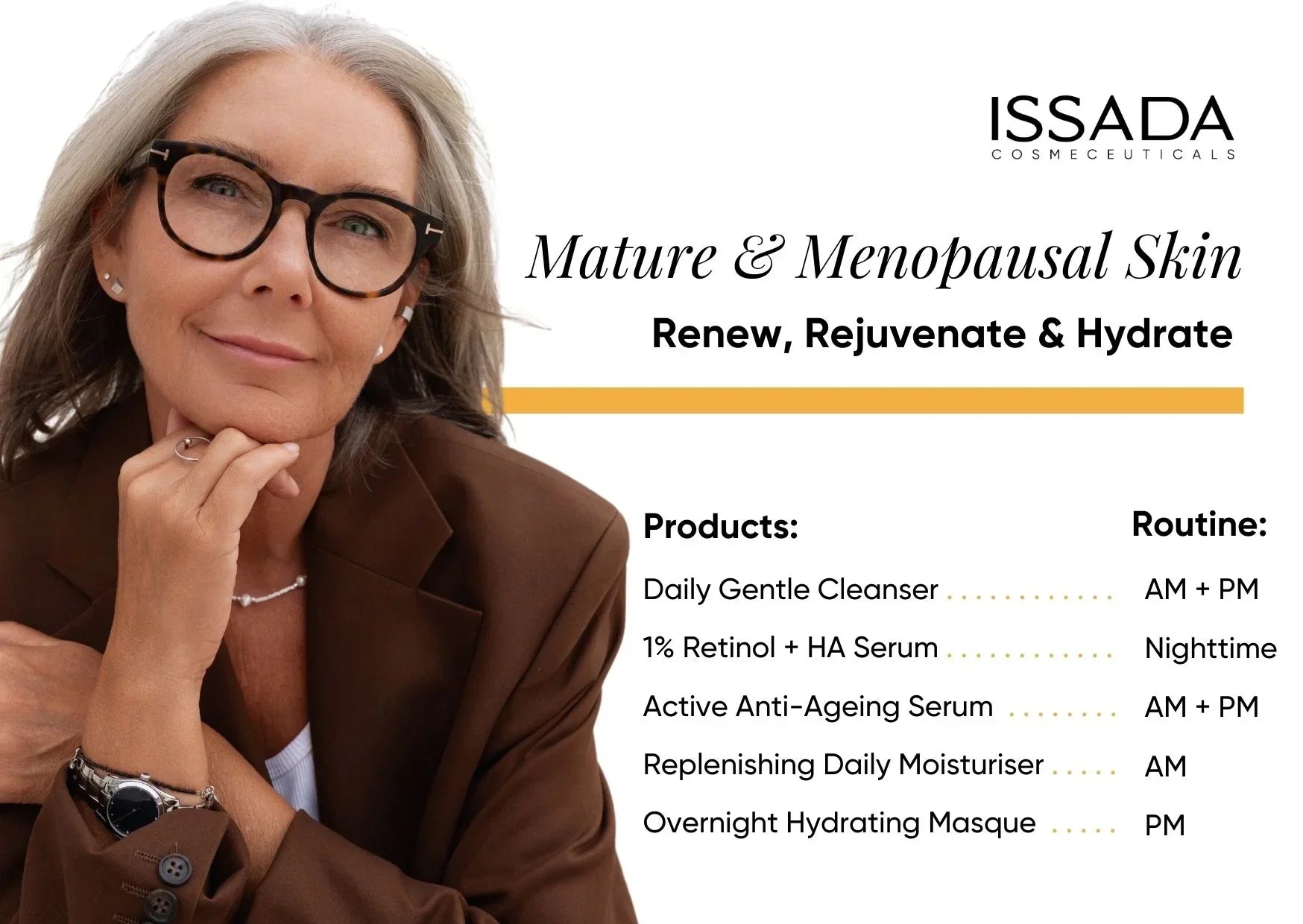
Our Anti-Ageing / Mature Skin Bundle puts five full-size products together for mature and menopausal skin: Daily Gentle Cleansing Gel, Active Anti-Ageing Serum, 1% Retinol + HA, Replenishing Daily Moisturiser and Overnight Hydrating Masque, with a cosmetic bag. It's built around hydration and barrier support, which is exactly what you want around an exfoliating step. Here's how to add one acid product:
Morning: Daily Gentle Cleansing Gel (or the 14% Glycolic Polishing Scrub two or three mornings a week) → Active Anti-Ageing Serum → Replenishing Daily Moisturiser → SPF 50+
Retinol nights (2–3 a week to start): Daily Gentle Cleansing Gel → 1% Retinol + HA → Active Anti-Ageing Serum → Overnight Hydrating Masque
Other nights: Daily Gentle Cleansing Gel (or the Salicylic Purifying Cleanser two or three nights a week) → Active Anti-Ageing Serum → Overnight Hydrating Masque
The simple rule: keep your acid and your retinol apart. Use the scrub in the morning, or the cleanser on non-retinol nights, and your skin gets the benefits of both without being overloaded. For the full step-by-step routine, see our complete anti-ageing skincare routine for mature skin.
Who Should Take Extra Care
- Very dry, sensitive or barrier-impaired skin: start once a week and build up slowly, or wait until your skin feels comfortable again.
- Visible redness or rosacea-prone skin: talk to your skin therapist before adding acids.
- Salicylic acid: not suitable if you're allergic to aspirin, pregnant or breastfeeding, or taking oral acne medication (such as Roaccutane).
- After a peel, laser or other skin treatment: follow your clinician's aftercare first.
- Sun: AHAs can make skin more sensitive to the sun, so wear SPF 50+ every day.
- New to acids? Patch test first, avoid the eye area, and if your skin stings or feels tight, cut back.
Frequently Asked Questions
Is salicylic acid only for acne?
No. Salicylic acid is best known for congested skin, but it also exfoliates the surface. That makes it a good choice for mature skin that's dull and rough as well as a little congested, which is common around menopause.
Can I use AHAs and BHAs during menopause?
Yes, most people can. Menopausal skin tends to be drier and more sensitive, so use them two or three times a week rather than daily, and keep hydration and moisture high in the rest of your routine.
Can I use acids and retinol together?
Not on the same night, at least to start. Use your acid in the morning or on non-retinol nights. Once your skin is comfortable with both, your skin therapist can help you adjust.
Should I use the cleanser and the scrub together?
Choose one to start. Both contain AHA and BHA, so using both on the same day is more exfoliation than most mature skin needs.
How soon will I notice a difference?
Skin usually feels smoother after the first use. Brighter-looking, more even skin builds up over a few weeks of regular use.

Disclaimer: This content is for general information and isn't a substitute for advice from your own dermatologist, particularly if you have sensitive skin or a diagnosed skin condition.


Leave a comment